

June 2010 in Ciudad Juárez. I was 23. I remember sweating through my clothes that day, soaking the car seat—a mix of anxiety and the heat. I received a call about a shooting on the border near “Puente Negro,” or the Black Bridge, a crossing for trains and cargo between Ciudad Juárez, Mexico, and El Paso, Texas.
In the river valley below—where the Rio Grande is funneled through a concrete culvert—the Mexican military was in a standoff with the U.S. Border Patrol on the opposite side. In the shade of the bridge, a group of people sat mourning their loved one. Below, near the water, was a body. It was 15-year-old Sergio Adrián Hernández Güereca.
Güereca’s family maintains that he was playing a game with friends, daring each other to run back and forth from the U.S. side back into Mexico. Other stories say that Güereca had been near the border when a group of migrants attempted to cross. As some versions of the story tell it, a few children began throwing rocks across the river toward the other embankment after a group of migrants was being detained by the Border Patrol. It’s a long throw for anyone, even an athletic kid with a strong arm, to make it from one side to the other. I can’t imagine they posed any real threat. Nonetheless, Agent Jesus Mesa Jr. drew his handgun and fired across the border into Mexico, striking the young boy and killing him instantly. Whether they were playing a game - or in fact throwing rocks - there is no scenario where lethal force was warranted.
The scene was incredibly tense. Gunshots were fired at least twice more while I was there (although I do not actually know where the gunfire originated), sending the growing crowd retreating to the concrete embankment for cover. The Mexican Military showed restraint, but there was clear pressure to push the U.S. officials back to their side. For several hours, we watched as Border Patrol agents took photographs of the evidence and the crowd on the Mexican side, all of it punctuated by wails of grief.
I spent the next few days covering the story for The Wall Street Journal. Güereca’s family was kind to the press; they wanted us there, hoping that we could share their story and bring about some measure of justice.
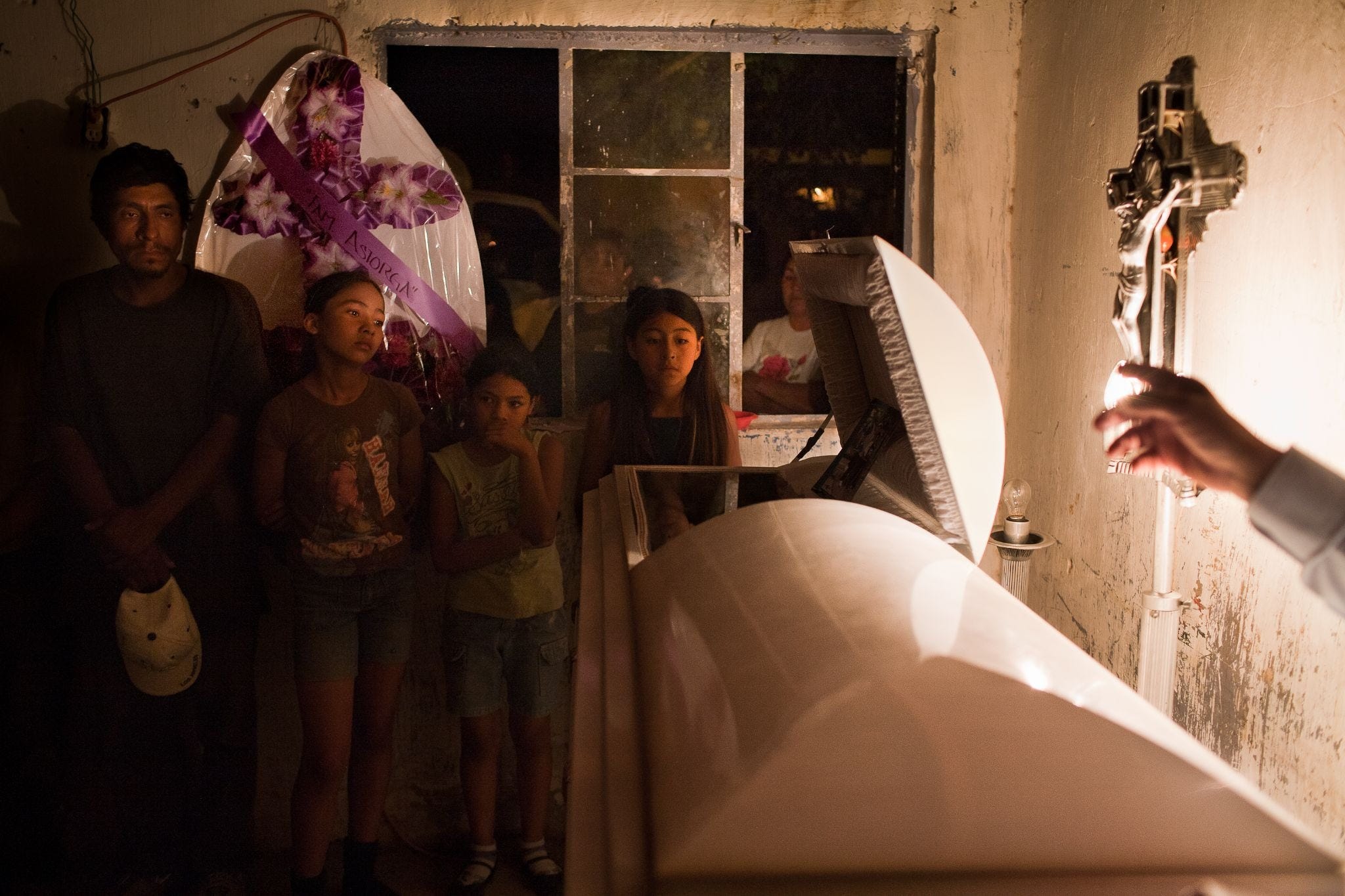
Justice, however, was never served. Agent Jesus Mesa Jr. walked free, and no compensation for his death was made, despite the family taking the case all the way to the Supreme Court.
This was not an isolated event. There has been several shootings like this one in Border Patrol history. Even more in the larger Homeland Security apparatus. The killing of 37-year-old Renée Good by an ICE agent in Minneapolis this past January—and the nationwide protests that followed—immediately brought me back to that moment at Puente Negro.
To understand this continuum of state escalation, it is necessary to understand the modern border apparatus. Güereca was killed by an agent from Customs and Border Protection (CBP), the agency tasked with policing the physical boundary and a 100-mile interior zone. Good was killed by an agent from Immigration and Customs Enforcement (ICE), the agency responsible for interior enforcement, detention, and deportation. Both of these agencies operate under the massive umbrella of the Department of Homeland Security (DHS), formed in the wake of 9/11.
Qualitative data collected over the past two decades by organizations like the ACLU and the American Immigration Council proves that these civil rights violations are institutional. Extensive documentation reveals patterns of systemic abuse: deliberate medical neglect and inhumane conditions in ICE detention facilities, such as the severe physical and sexual abuse recently documented at Fort Bliss, the intentional destruction of humanitarian water supplies by CBP agents in the desert, and the systemic use of racial profiling in roving interior patrols. According to advocacy tracking, since 2010, there have been at least 367 fatal encounters with CBP personnel, and 2025 marked ICE’s deadliest year in over two decades, with 32 people dying in custody. There has been at least six cross border shootings since Güereca’s death. One notable case, José Antonio Elena Rodríguez was shot ten times in the back through the border fence in Nogales, Sonora.
Violence is entangled in the history of these agencies. When the U.S. Border Patrol was founded in 1924, it was established largely to enforce the xenophobic national origins quotas of the era. As historian Kelly Lytle Hernández documents in her foundational text Migra! A History of the U.S. Border Patrol, the early agency functioned as a frontline instrument of racial control. Recruits were frequently drawn directly from organizations steeped in racial violence, including the Texas Rangers and the Ku Klux Klan. This brought a culture of vigilantism to the border that persists to this day. In the 1970s, Mexican workers became a scapegoat for stagnation in the U.S. economy, and the rhetoric of an “invasion” took root. In the 1980s, President Reagan began tying border security to the War on Drugs, further fortifying the region. In the 1990s, operations in San Diego and El Paso tightened restrictions around migration. But it was in the 2000s, post-9/11, that the true militarization of the border and the creation of Homeland Security took full effect. Trump’s recent discourse is simply a continuation of these narratives. Ultimately, the United States has been in an active defensive posture toward its southern neighbor since the Mexican-American War—a war ironically started by the U.S.
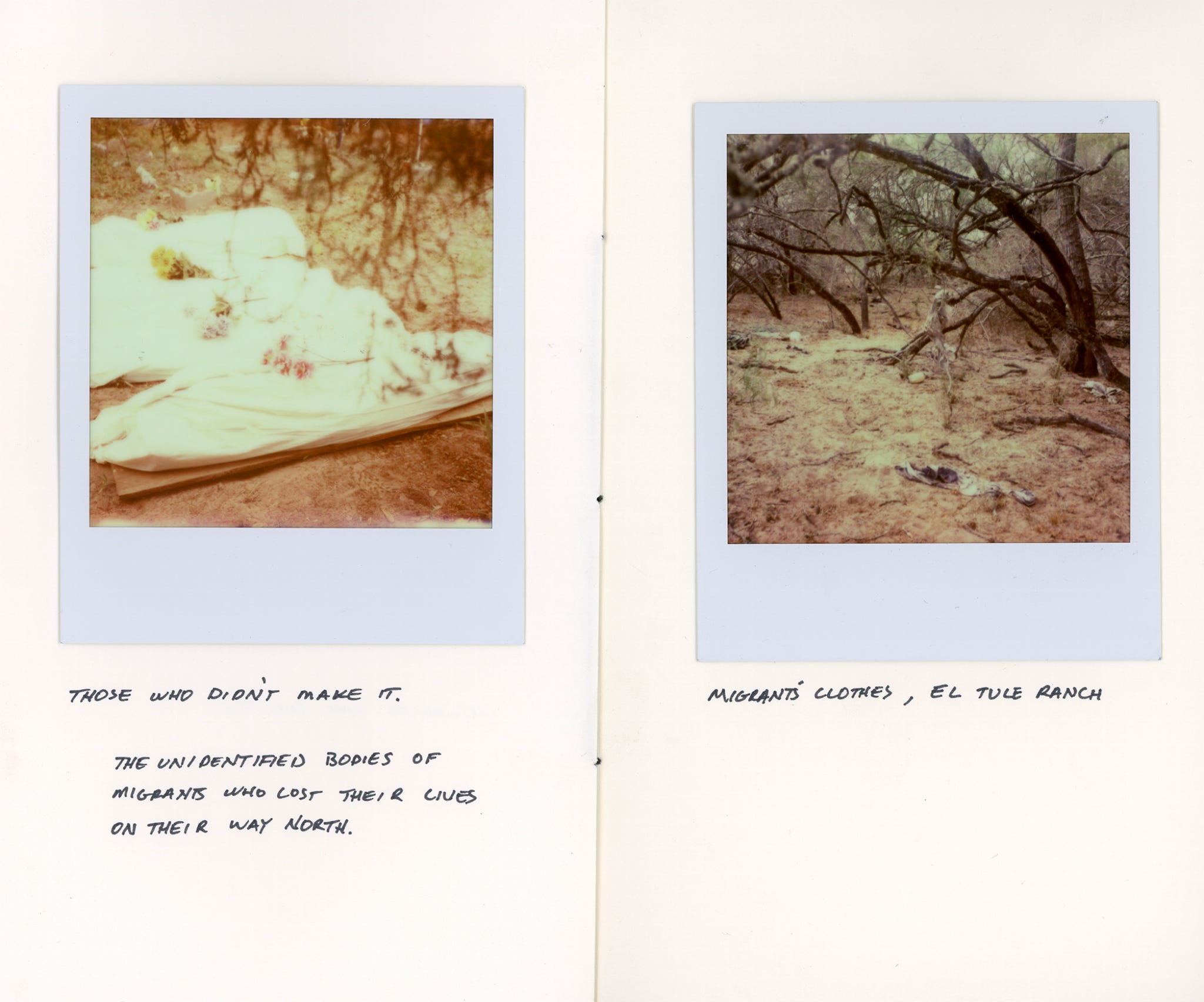
Beyond the gunfire, there are other types of violence. The subtle kind. The kind that is a direct result of enforcement policies. Every year, migrants die crossing into the United States in South Texas. They die primarily because they are chased by Border Patrol into the brush near checkpoints, where they lose their guides. This type of death is the quiet reality of security on the border.
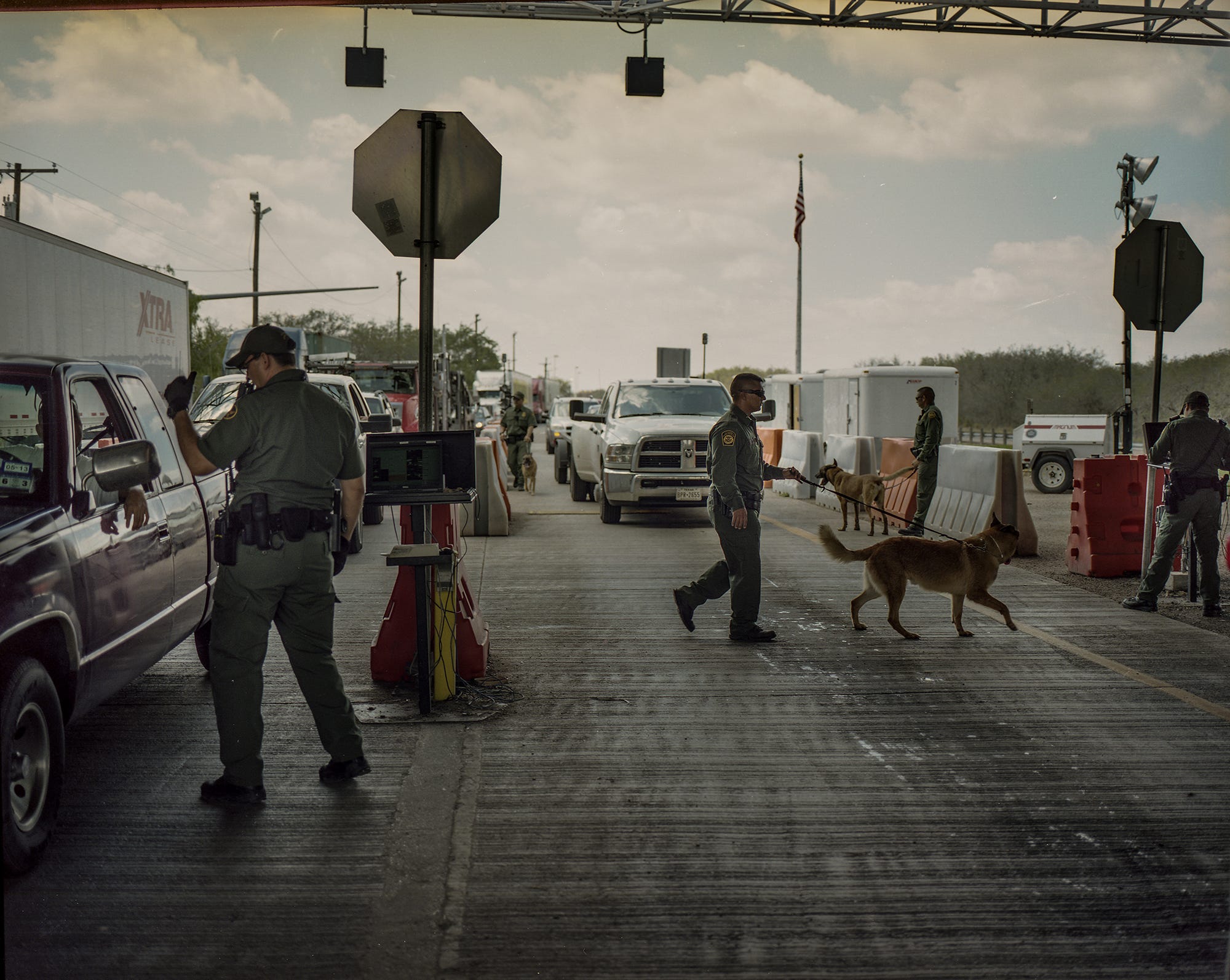
After several days of covering Güereca’s death, I decided to cross into Texas to visit my cousins. I needed a break. But when I tried to cross, the Border Patrol pulled me into secondary questioning. They didn’t ask me directly about Güereca, but they gave me a ton of grief about my cameras and my residency in Mexico. They told me that I was an illegal resident of Mexico (which was fundamentally untrue) and that I had been crossing illegally (also untrue). For at least a year following the publication of this story, I would be pulled aside into secondary screening whenever I crossed into the United States—whether I was crossing in a vehicle or even on an airplane.
Over the years, I have spent a lot of time with Homeland Security as a photojournalist, and also on a personal level. I have family who served in the organization, and I think most folks who live in border areas have at least some personal relationship with them. Growing up, I would see them at checkpoints and get searched. Once, while crossing to Texas from Piedras Negras, they cut a hole in my car seat looking for drugs. They found none. Stories like this are pretty PG. There’s nothing special about that circumstance.
I believe that, at a minimum, Homeland Security does serve some purpose. But at the same time, we can not deny that currently they act without oversight and near-total impunity. The inner culture of these agencies became most apparent while I was working alongside the Brooks County Sheriff’s Department in Falfurrias, Texas, about three years after Güereca’s death. We spent a lot of time around ICE and Homeland Security, and while I was open about my capacity as a journalist, many of the agents made assumptions. They would see me and my blonde hair, riding with the Sheriff, and just act like themselves. The conversations were inherently racist. I remember a time when two agents high-fived after catching a group of migrants, loudly declaring, “Crushing dreams.” Having just come back from Honduras, where I was working with people suffering from severe political violence and interviewing migrants seeking refugee status, that blasé statement landed loudly. The county sheriff exchanged looks with me. It didn’t sit well with him either.
But looking closer, you realize these folks are cogs in the wheel of massive U.S. machinery. By design, border policy has actually worked. It has worked in keeping the United States wealthy by strictly limiting access to certain people. Despite free trade agreements designed to let goods and raw materials flow freely across the border, the system ensures that labor remains artificially cheap in places like Ciudad Juárez. Meanwhile, those who do manage to trickle in through the brush and past the guards are work jobs for minimal pay and without legal protections. Providing those protections is costly for businesses, especially those incentivized to produce ever-cheaper goods for American households. A militarized border means a vulnerable workforce, which means higher corporate profits—and, of course, booming business for the detention centers and jails.
But what does the inherently violent nature of these institutions have to do with effective policing? When we govern ourselves from a position of fear rather than compassion, it always ends in more pain, loss, and suffering. It ends in wasted lives.
If we chose to govern ourselves from a position of compassion, we could change this dynamic entirely. But compassion requires training, time, education, and mentorship. These are harder skills to learn. Navigating people in vulnerable, desperate situations requires deep social awareness. I’ve seen these moments of compassion from Border Patrol agents, too—moments when they offer water to migrants and treat them with genuine care. Some of these agents grew up in the Rio Grande Valley, where immigration is a daily reality. For them, the Border Patrol is a way to make a living and serve their community.
But while observing these agencies on patrol, you quickly see that they aren’t hunting hardened criminals; they are mostly chasing regular, desperate people. There is an undeniable adrenaline rush to it. A call comes over the radio, people scatter, and suddenly they are blasting at 100 mph down dirt country roads. It feels lawless. For some folks coming back from deployments in Afghanistan and Iraq, being out on these roads was a way to just let it rip. It’s a recipe for disaster. Add that adrenaline culture to a racist institutional history, and the current hiring practices become deeply worrying.
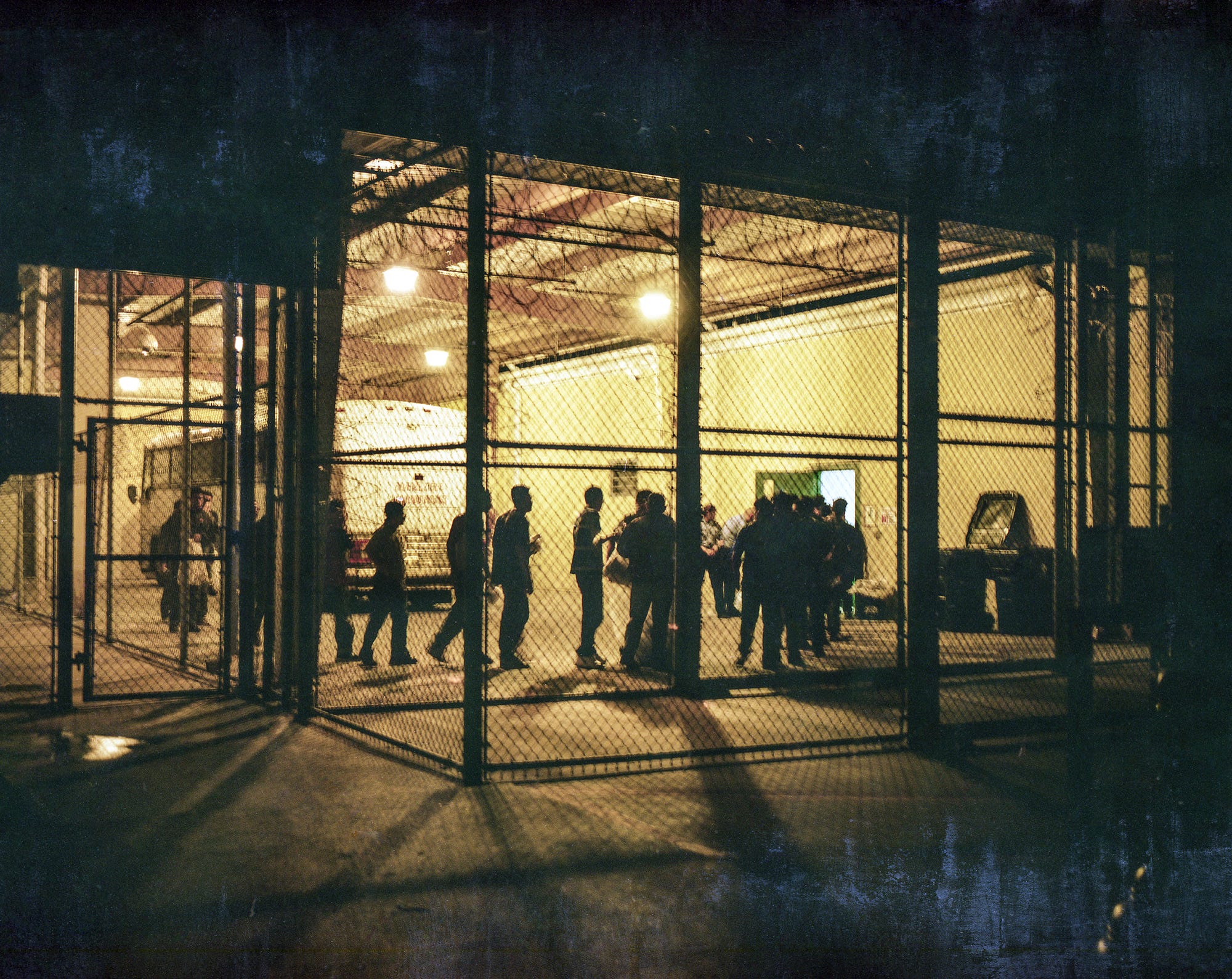
Allowing these institutions to operate like this has been devastating for society. By violently ripping families apart, we create a world where immigrants are terrified to seek help from authorities. This leaves them more vulnerable and susceptible to exploitation than ever, which only creates more internal violence and further stokes the fire of nationalism within the United States—a fire that ultimately only serves a powerful few.
Recent tactics by Homeland Security officials have been over the top, almost performatively violent. You can see the rage in the officers while they are executing their orders. The dismissiveness of basic human decency is often palpable. An ICE agent once told me that they were trained to do exactly that. They were trained to be aggressive, to shake people up, and to intimidate them. They are quite literally the point of the spear of modern American authority.
The border is a place where human rights are suspended, where private property can be searched without cause, and where anyone can be detained and questioned. The expansion of these policies across the nation via the Homeland Security apparatus is deeply troubling. It means that a federal agency now has unchecked authority to execute violence with near-total disregard for the law, anywhere in the United States. The apparatus has become so massive that it needs the perpetual crisis at the border to justify its budget, its weapons, and its authority. If the enemy disappears, their power disappears. The modern security state’s existence is bound to this violence. And that means people will continue to lose their lives.
It’s revolting to see so much hate and division over imaginary lines. At some point, you would think people would realize that we are all far more similar than different, and that in the end, we all seek the same things… love, acceptance, and peace.